
Blog Post
The 20-Minute Pilates Habit: Real Results for People With No Time
There is a version of you who does the full hour. She leaves early, takes the class, stretches afterwards, drives home unhurried. I like her. I’ve just never met her in a busy week.
What I meet instead, constantly, is a woman who knows exactly what movement would do for her, and cannot find where to put it. Not because she’s undisciplined. Because the hour genuinely isn’t there, and hasn’t been for years.
So let’s stop trying to find the hour. Twenty minutes is not the consolation prize. For Pilates in particular, it’s often the smarter structure, and I want to show you why, what it actually changes, and how to make it happen in a week that’s already full.
Can you really get results from a 20-minute Pilates workout?
Yes. But “yes, anything’s better than nothing” is a weak answer, so here’s the real one.
Pilates is not primarily an endurance activity. You’re not accumulating time under load the way you would on a bike. You’re teaching your body a different way of organising itself: ribs settled over pelvis, breath moving while the centre stays supported, a leg able to travel without the whole torso going along for the ride.
That is skill learning. And skill learning responds to how often far more than how long. Twenty attentive minutes, four mornings a week, gives your nervous system four separate chances to rehearse a better pattern. Eighty minutes once a week gives it one. Anyone who has learned an instrument or a language already knows which of those works.
There’s a second reason, less flattering but true: Pilates done properly is mentally demanding, and attention runs out well before muscles do. Twenty minutes of genuine precision, with slow tempo, breath in the right places and small corrections as you go, is harder work than forty minutes of half-presence. When someone tells me the longer class felt easier, they’re usually telling me they drifted for a while in the middle. Everyone does. Twenty minutes doesn’t really have a middle to drift in.
What changes first, and how soon?
Joseph Pilates offered a timeline nearly a century ago that still holds up better than most: feel the difference in ten sessions, see it in twenty, a whole new body in thirty. At three sessions a week, that’s roughly three weeks, seven weeks, and ten.
In practice it tends to run like this.
The first two or three weeks are almost entirely internal, which is exactly why people give up in them. Nothing looks different yet. But you’ll catch yourself breathing more deeply. You’ll notice you’ve stopped slumping at your desk without having decided to. The low back that used to complain by mid-afternoon quietens down. More people mention sleeping better than mention anything else in that first stretch.
Somewhere around six to eight weeks, it becomes visible. Posture shifts enough that someone remarks on it. There’s more length through the waist. A position that made you shake in week one holds steady. Getting up off the floor stops being an event.
By around three months it stops being exercise and starts being the way you move. Shopping, stairs, a toddler on one hip, a long walk without your back filing a complaint. That’s the stage worth staying for.
None of this is a promise. Bodies differ, and someone rebuilding after injury or after a baby will travel this road at her own pace. But if you’ve practised steadily for six weeks and felt genuinely nothing, something in the mix needs adjusting, and I’ll come to what that usually is.
How many 20-minute sessions a week do you actually need?
Two holds what you’ve got. Three is where things start moving. Four is where they move faster.
If you’re beginning from nothing, take three and defend them. Three twenty-minute sessions is one hour a week, less than most of us spend choosing something to watch. Once those three happen without an internal negotiation, add a fourth.
Every day is fine too, with one caveat: vary what you ask for. A demanding centre-focused session doesn’t want to be followed by another one. Alternate: something strong, then something mobility-led, then something for the shoulders and upper back. Adaptation happens in the gaps, not in the work.
And one thing I’d like to say plainly, because it ends more Pilates habits than any injury ever has: a week with one session in it is a week with one session in it. It is not a failure, and it does not need to be restarted from zero on Monday.
Why does twenty minutes suit Pilates so well?
Partly the attention thing above. But mostly because short and frequent is kinder to real bodies in real seasons.
Someone moving through menopause, recovering from birth, managing energy around a health condition, or simply running on interrupted sleep will almost always do better with short, well-scaled, regular sessions than with occasional long ones. Long sessions demand a good day. Twenty minutes only demands a day. I’ve written more about that approach in Pilates for Menopause, and the principle carries everywhere: meet the body where it is today, more often, rather than where you’d like it to be, occasionally.
What should a good 20 minutes contain?
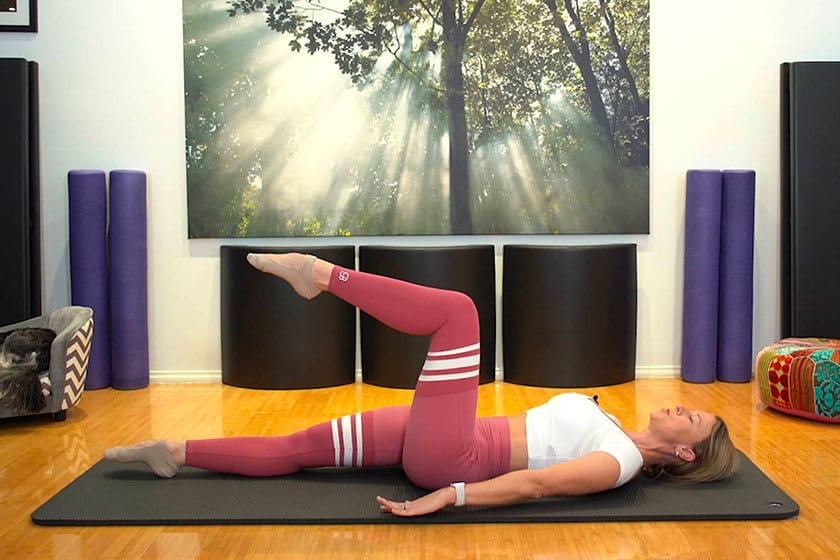
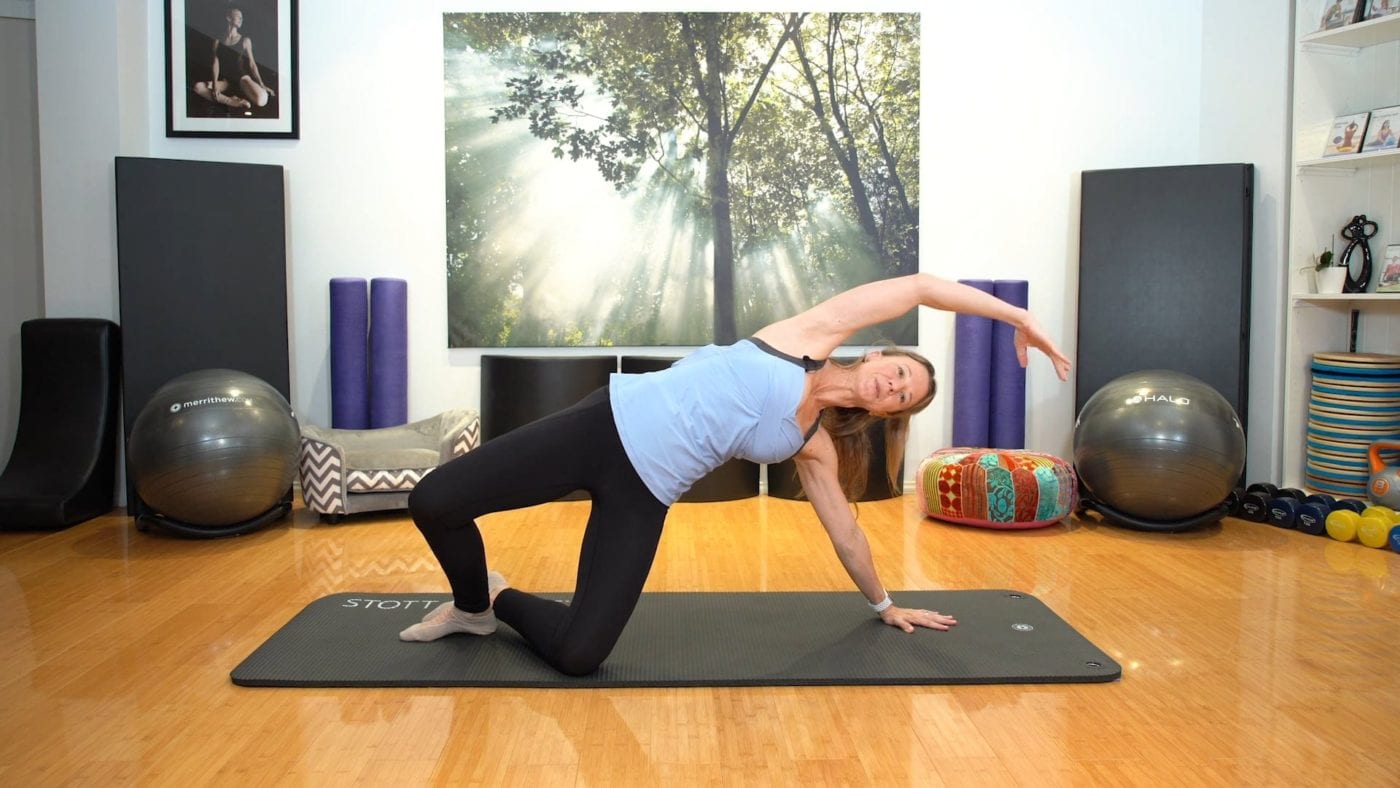
Structure matters far more than intensity here. A well-built twenty minutes usually moves through four things: a few minutes of breath and waking up the deep abdominals; some spinal mobility so the back moves in every direction it’s meant to; ten or so minutes of real work through the centre, hips and shoulders; and a short deliberate finish, so you don’t launch straight from the mat into your inbox.
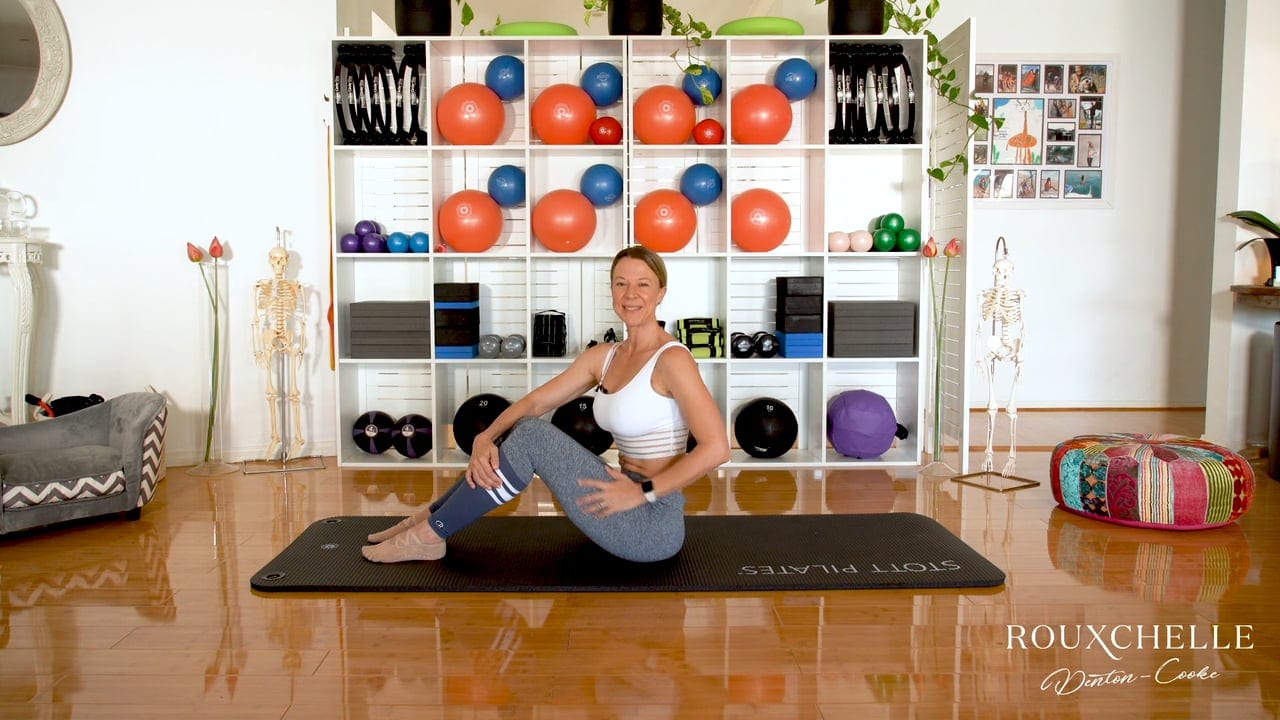
You need a mat and enough floor to lie down with your arms out. That’s the equipment list.
What you do need is to not be designing the session while you’re in it. That’s the genuine value of a guided class: someone else has already made the sequencing decisions, so your attention can go where it’s useful. In the ROUX On Demand library classes are filtered by level and by equipment and run from around ten minutes to forty-five, so you can choose to fit the day you’re actually having. If you’re starting from scratch, Basic Principles is the right shape: a beginner matwork class of about twenty minutes. It’s meant to be repeated, not ticked off. Repetition is where technique lands.
How do you make twenty minutes actually happen?
This is the part most articles skip, and it’s the part that decides everything.
Choose the classes before you need them. Decision-making is the expensive step, not the movement. Pick your three sessions on Sunday night and the Tuesday version of you only has to press play.
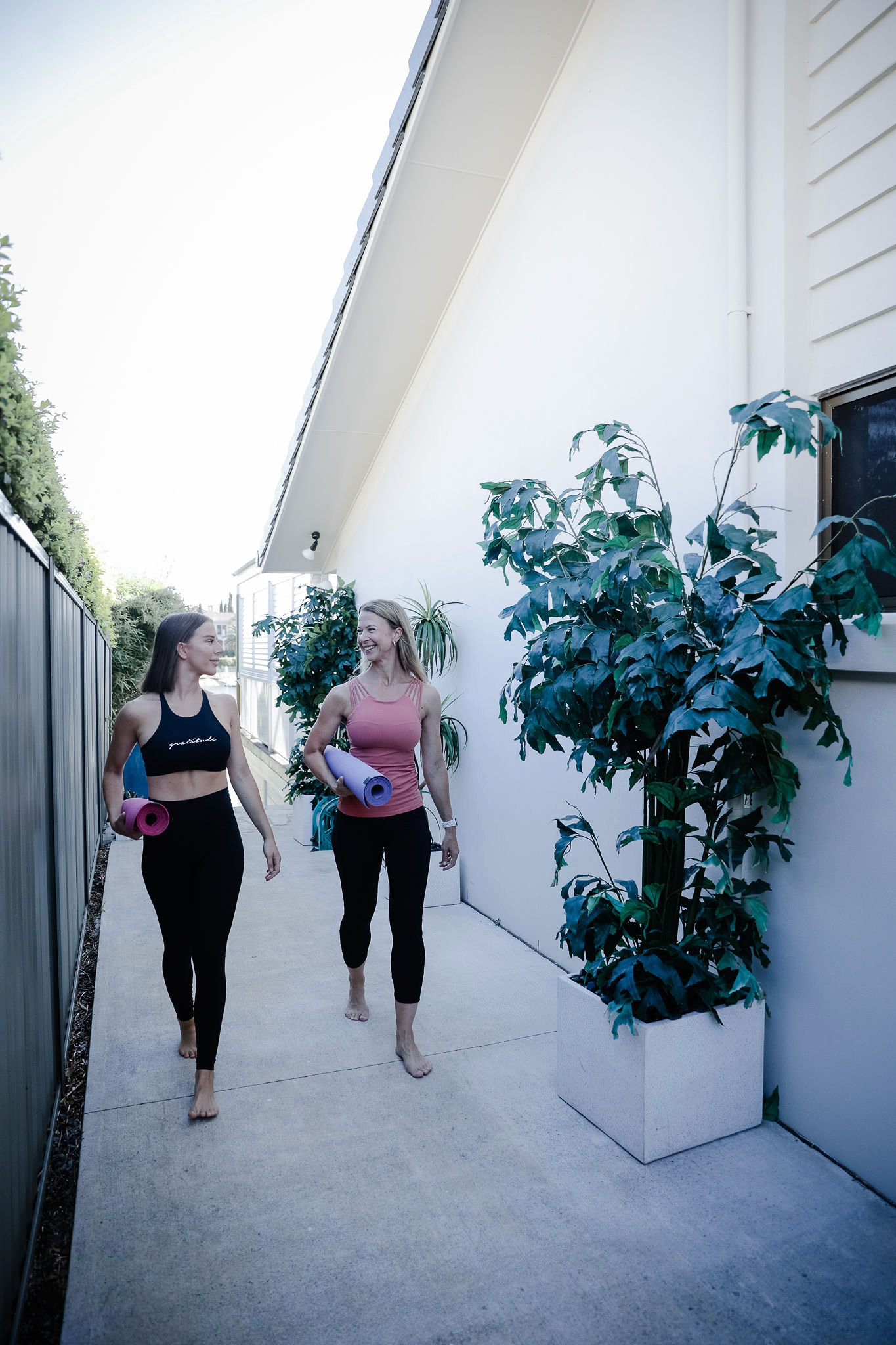
Attach it to something that already happens. After the school run, before the first coffee, straight after the laptop closes. A habit tied to an existing anchor survives; a habit floating loose in the day gets eaten.
Leave the mat out. Visible, unrolled, in the way. Friction is the enemy, and rolling a mat out of a cupboard is more friction than it sounds at 6am.
Make the entry point embarrassingly small. On a bad day, do the first five minutes and give yourself full permission to stop. You rarely will, but knowing you can is what gets you onto the floor, and being on the floor is the whole battle. That’s the same logic behind training through pregnancy and the year after birth, which I’ve written about in Pilates Through Pregnancy and After Birth: the plan has to survive contact with a real day, or it isn’t a plan.
What if you’ve been practising and nothing has changed?
It’s nearly always one of these, and all of them are fixable.
You’re moving too fast, and the tempo is the exercise, so Pilates done quickly is just movement. You’ve stopped breathing at the hard part, which switches off exactly the support you’re trying to build; breathe out on the effort. You never made it harder: the class that challenged you in week one shouldn’t still be the right class in week ten. You’re consistent in bursts rather than in pattern; the body responds to the rhythm, not to the monthly average. Or you’re not sleeping and eating enough to rebuild, because training is the request and recovery is where it gets filled.
Frequently asked questions
Is 20 minutes of Pilates a day enough to see results?
For most people, yes, as long as those twenty minutes are focused and you vary what you work on across the week. Consistency across three to eight weeks matters far more than the length of any single session.
How long before I see results from 20-minute Pilates sessions?
At three sessions a week, expect to feel change within two to three weeks: deeper breath, easier posture, less back tension, better sleep. Visible changes in strength and shape usually follow around the six-to-eight-week mark.
Is a short Pilates session better than a long one?
It’s better if it’s the one you’ll actually do. Long sessions are lovely when you have the time and attention for them, but four short sessions will generally outperform one long one, because this method rewards frequency and repetition.
Do I need equipment for a 20-minute Pilates workout at home?
No. Matwork is the foundation of the method and asks for nothing but floor space. A small ball or a resistance band adds variety later, but neither is required to start.
Start with twenty minutes this week
You don’t need a new schedule, a spare room, or a fresh surge of motivation. You need twenty minutes, three times, and the classes chosen in advance so there’s nothing left to decide when the moment arrives.
Start with ROUX On Demand, pick your first three sessions tonight, and put them in the calendar like anything else that matters. In three weeks you’ll notice something, and noticing is what turns twenty minutes into a habit you keep.